Showing posts with label historians. Show all posts

March 14, 2014

Death of Sparks: wide and beneficent influence

"The name of Jared Sparks is intimately associated with the historical literature of this country," began the obituary of historian Jared Sparks, who died of pneumonia on March 14, 1866. He was 76 years old. The obituary added, "He has exerted a wide and beneficent influence; he has finished a good work and gained for himself a brilliant renown." He was also, for a time, chaplain for Congress and, later, President of Harvard University.

Perhaps Sparks's most well-known work today is his biographies of George Washington. To complete the work, he sought out original documents, including letters and whatever first-hand testimony he could find. First published as a multi-volume Life and Letters of George Washington beginning in 1834, a simplified and abridged version was published as Life of George Washington in 1842. He also wrote books or articles on a variety of other figures associated with the American Revolution, including Benjamin Franklin, John Andre, Benedict Arnold, Charles Lee, and Anthony Wayne.

Sparks chose to focus on the origins of the country because of what he considered a contentious contemporary period in American politics. Looking to the past, he said, was "the polestar to which all may look for safety." Perhaps so, but Sparks also took liberties in writing about the Revolution and its major figures by creating an illusion of perfect harmony. One contemporary wrote that Sparks was guilty of "flagrant literary misdemeanour" by re-wording much of the correspondence he used as a source for his own writing. After his death, one critic noted that Sparks had "altered" and "embellished" Washington's letters to  ensure that the historical figure matched the presumed dignity and character that fit Sparks's purpose of harmony. Consider this excerpt titled "American History":

Besides a love of adventure, and an enthusiasm that surrounded every difficulty, the character of its founders was marked by a hardy enterprise and sturdiness of purpose, which carried them onward through perils and sufferings, that would have appalled weaker minds and less resolute hearts. This is the first great feature of resemblance in all the early settlers, whether they came to the north or to the south, and it merits notice from the influence it could not fail to exercise on their future acts and character, both domestic and politic.  The timid, the wavering, the feeble-minded, the sons of indolence and ease, were not among those who left the comforts of home, braved the tempests of the ocean, and sought danger on the shores of an unknown and inhospitable world.

Enduring his final illness, Sparks was surrounded by family and friends. His friends insisted his final days were "painless and placid". His children recorded among his last words, "Strive to do good and you will bring it to pass." His substantial collection of manuscripts and books were donated to Harvard.

April 2, 2013

Prescott and Peru: on his blindness

Historian William Hickling Prescott signed the preface to his two-volume History of the Conquest of Peru on April 2, 1847. Four years earlier, he had published his highly successful History of the Conquest of Mexico and, before that, History of Ferdinand and Isabella at a time when historical works were popular among both critics and general readers. His History of the Conquest of Peru, an extension of that book, would make him the preeminent scholar of the Spanish Empire.

In his preface, Prescott explains his work: "I have accumulated a large amount of manuscripts, of the most various character, and from the most authentic sources." In addition to accessing primary sources including royal documents, personal diaries, and various private correspondences, Prescott also relied on several other scholars. Ultimately, he had more information on Peru than he did on his book for Mexico: "There is scarcely a nook or corner so obscure, in the path of the adventurer, that some light has not been thrown on it by the written correspondence of the period."

Progress on the book did not come easily. He found frequent inconsistencies or contradictions in his research and often had to determine how reliable his sources were. Further, he was frequently ill and was at first unable to work much. He used a bet with a friend to motivate him to write quickly but he was always hampered by his disability — Prescott was nearly blind. If he had tried to keep the fact a secret, the success of his previous works exposed it. The rumors were enough that he needed to address them directly in his preface: "I may be permitted to add a few [remarks] of a personal nature," he wrote. He had damaged his eyes while a student at Harvard, losing the vision in one of them completely, while the other was frequently useless as well. He would not call himself blind, nor would he allow his lack of vision to hamper him, however: "I resolved to make the ear, if possible, do the work of the eye."

Prescott hired a secretary, who read aloud to him the various materials he had gathered and wrote down any notes. Both his research and his notes upon them were read to him often enough that he memorized their contents — a staggering accomplishment considering the abundance of material. When alone, Prescott also utilized a "writing-case" (visible in the picture above) which guided his pen when he wanted to write himself. When his one working eye was well enough, he read as much as he could, possibly damaging it further, though it would inevitably fail after about an hour. In fact, Prescott surmised that the task of writing The History of the Conquest of Peru made him completely blind:

I have not had the use of it, on an average, for more than an hour a day. Nor can I cheer myself with the delusive expectation, that, impaired as the organ has become, from having been tasked, probably, beyond its strength, it can ever renew its youth, or be of much service to me hereafter in my literary researches.

April 26, 2012

Ridpath: the one really important fact on the earth

It is said that John Clark Ridpath was born in a log cabin in Putnam County, Indiana on April 26, 1840. Though his upbringing did not include a formal education, Ridpath became an avid reader with an appetite for books that was described as "insatiable" even in his childhood. At 17, he became a local teacher before enrolling at what is now DePauw University, graduating at the top of his class in 1863. From there, his education career rapidly grew from teacher to principal to superintendent in public schools, then professor, chair and, eventually, vice-president at his alma mater.

At was while he was in college that Ridpath began publishing essays, sketches, and poems. He switched to books of history and, in 1874, published his important Academic History of the United States. Similar books followed. In 1880, he retired from his educational career and focused on writing, publishing biographies of President James Garfield and others.

His major work, however, was the 16-volume Ridpath's History of the World (or Cyclopedia of Universal History), first published in 1894 and illustrated with over 3000 images. His goal was to present a history of the entire human race "from the beginnings of civilization to the present time." Several editions were published in the next several decades. In his preface, Ridpath explains that "mankind is not an event, but a producing force" and, as such, will not write a book like other traditional histories. Further, he says, human civilization is like a river which shapes the landscape and moves resources from one place to another. Though other books have focused on the works, his subject was what created those works in general; "What of the river itself?" he asks:

It pours along, gathering and increasing. It is an entity. It may well seem alive. It moves and roars and rushes. Its volume is measurable, but becomes immeasurable with increase. Its color is of this tint. Its water has this quality or that. Its manner is placid, smiling, gentle, or angry, turbulent, stormy. It sleeps or wakes. It rejoices with sunshine or calm, moans with the pressure of shadow and tempest, becomes furious, and springs with madness through narrowing gorges and over horrid precipices. It yields to the rigor of winter, and bursts with the renewal of spring. All this is the river itself. All this has respect to the substance and life of the great fact, and not to its results and reactions.

The analogue of the river is the human race. That, too, is a stream flowing from an invisible fountain. That also has had its sources in the highlands of the past, and that also has gathered and rolled down with increasing volume into the plains of the present. Like the river, the human race possesses a life of its own. It is an entity dividing into many entities. It spreads far and covers the earth with its floods. It leaves on all shores and continents the signs of its presence and activities. It builds up and demolishes. It changes its course according to the exigencies of the physical barriers that are set against its progress. It breaks through and traverses vast regions. It modifies the whole globe, and determines both its material and its immaterial aspects. It becomes the one really important fact on the earth.

April 9, 2012

Parkman: such a set of beasts

Francis Parkman was always fascinated by the forests and wilderness of the United States. Though born on the east coast in Boston, he had a great desire to travel west. Eventually, he did, and his most well-remembered work is The Oregon Trail, first serialized in 1847.

Just a year before that book was published, Parkman found himself in Cincinnati, Ohio on a hunting expedition and where he was studying Native Americans. A burgeoning western civilization of Americans of European descent was also developing, though he found it quite different from his New England experience. He wrote to his mother on April 9, 1846:

To-day I reached Cincinnati, after a two days' passage down the Ohio. The boat was good enough though filled with a swarm of half-civilized reprobates, gambling, swearing, etc., among themselves... The great annoyance on board these boats is the absurd haste of everybody to gulp down their meals. Ten minutes suffices for dinner, and it requires great skill and assiduity to secure a competent allowance in that space of time. As I don't much fancy this sort of proceeding, I generally manage to carry off from the table enough to alleviate the pangs of hunger without choking myself.

The case is much the same here in the best hotel in Cincinnati. When you sit down, you must begin without delay — grab whatever is within your reach, and keep hold of the plate by main force till you have helped yourself. Eat up as many potatoes, onions, or turnips as you can lay your hands on; and take your meat afterwards, whenever you have a chance to get it. It is only by economizing time in this fashion that you can avoid starvation — such a set of beasts are these Western men.

January 17, 2012

Death of Bancroft: a world of truth

George Bancroft was 90 years old when he died in Washington, D.C., on January 17, 1891. Though his most well-known role was probably as the Secretary of the Navy, appointed by President James K. Polk, he was also an author. His writings are almost exclusively focused on the history of the United States and in that field he was highly regarded.

He also wrote an essay called "The Last Moments of Eminent Men" (1834), in which he described advice on dying mostly from famous political leaders and writers. He begins by stating his disagreement with Lord Byron that heaven prefers the young. Instead, he says, that "length of days" is desirable and, further, that "gray hairs are a crown of glory: the only object of respect that can never excite envy." By then, Bancroft suggests, ambition transitions to observation, and an old man can be satisfied with their experience, and the happy man always wishes to prolong life.

Even so, Bancroft notes, despite this love for life, one need not look at death "with abjectness." He refers to the bravery of soldiers or of sailors who venture into stormy seas as a sign that death can be faced with courage. His essay further discusses deathbed superstitions, those who seek death through suicide, and men who vainly build their monuments while yet living. The essay, really, talks about the value of life and the peace of death. Bancroft concludes with a paragraph dedicated to people like himself:

A tranquil death becomes the man of science, or the scholar. He should cultivate letters to the last moment of life; he should resign public honors as calmly as one would take off a domino on returning from a mask. He should listen to the signal for his departure, not with exultation, and not with indifference. Respecting the dread solemnity of the change, and reposing in hope on the bosom of death, he should pass without boldness and without fear, from the struggles of inquiry to the certainty of knowledge, from a world of doubt to a world of truth.

January 11, 2012

Prescott: I have kept my resolve

It wasn't quite a New Year's resolution that propelled William Hickling Prescott forward in writing his history of Peru — it was a bet. His friend Edmund B. Otis had wagered $50 that Prescott could not write 100 pages in 100 days. After that 100 days was over, the bet was renewed for another 100 days until writing was finished.

But it was not mere laziness that was slowing down the project. "If I can once get in harness and work I shall do well," Prescott wrote, "but my joints are stiff, I think, as I grow old." The bet was his motivation. "Shame on me if I fail."

On January 11, 1846, a journal entry gives an update on his progress: "A miracle — I have kept my resolve thus far and been industrious three whole days! Now, meliora spero." (Translation: "I am better"). By then, Prescott was only 49 years old, but not in the best health. His eyes were always a concern. After an accident while a student at Harvard, he had lost sight in one eye and too much work left him blind in the other one as well.

Prescott's efforts were also hampered by a lack of interest in his subject, which he concluded was "second-rate." Still, he worked hard. By April, he admitted the book's "great defect is want of unity." He hoped the book would read like an adventure tale alone the lines of the Iliad, though he earlier warned himself, "It would not be decent, nor politic, to turn out histories like romances." Finally, in 1847, Prescott's History of the Conquest of Peru was published in two volumes. I haven't found for sure how much Otis paid him for its completion.

June 23, 2010

Death of Ellen Hardin Walworth

After living a long and somewhat tumultuous life, Ellen Hardin Walworth died on June 23, 1915 at the age of 82. A founder of the Daughters of the American Revolution (she became editor of its official publication American Monthly Magazine) as well as the Women's National War Relief Effort during the Spanish-American War, Walworth had her hands in several causes and organizations.

Walworth was also a writer and, for a time, she was an officer in the American Authors' Guild (which became the Society of American Authors) under the vice-presidency of Julia Ward Howe. Hardin's writings focused on history; she particularly was known for her expertise on the battlefields of Saratoga, where she lived for much of her life. Her interest in history led to her involvement in preserving many sites associated with American history, including Mount Vernon. She also arranged for the placement of several granite monuments in Saratoga in 1883 which later became part of the Saratoga National Historical Park. One of the spots she marked was the site where Benedict Arnold was wounded on what was known as Burgoyne's Hill.

In an essay titled "The Revival of Americanism," Walworth reminded readers that "next to love of self comes love of country." She writes, "In the United States our patriotism has not failed since the adoption of the Declaration of Independence, but it has been singularly evolved through various stages of growth and apparent rest." Americans, she says, are still defining themselves, through politics, culture, and an ongoing interest in the past and their family history. But, she insists, the kind of patriotism that inspired Nathan Hale to regret he had but one life to give to his country in wartime should spread into peace time as well.

Walworth was also interested in science (particularly geology) and was one of the earliest women to present a paper before the American Association for the Advancement of Science. Her personal life was a bit disastrous; perhaps I'll write more on that in July.

*Image courtesy of the Daughters of the American Revolution.

May 17, 2010

He loved to do good by stealth

On May 17, 1870, the poet/journalist William Cullen Bryant stood before the New York Historical Society to deliver his "Discourse on the Life, Character and Writings of Gulian Crommelin Verplanck." Verplanck, a politician and occasional writer associated with the Knickerbocker group, had died about two months earlier at the age of 83.

Verplanck was also the Historical Society's vice-president at the time of his death. Bryant began his speech by noting how their late colleague was part of the framework of the organization. "It is as if one of the columns which support a massive building had been suddenly taken away," he said. Bryant then described Verplanck's life, his ancestry, his education, his career. Verplanck, Bryant noted, had given his first public speech at the age of 18, a patriotic one for Independence Day.

Bryant said that Verplanck wrote one of the earliest reviews of his poetry. In 1824, when Bryant was "an unknown literary adventurer" (his words), Verplanck positively reviewed him and encouraged further writing. At the same time, Verplanck began his career as a politician, elected to Congress several times (while in Washington, he promoted copyright protections for American writers), later a member of the New York state legislature and, later, edited an American edition of the dramatic works of Shakespeare. He contributed to the North American Review, served as "governor" of a city hospital, wrote critical reviews of works by Washington Irving and others, was vice-chancellor of a university, wrote satirical pamphlets, served as president of the board of immigration, founded The Talisman journal with Bryant, and gave speeches on history, art, and literature. Verplanck was one of many who successfully wove a life of letters into a life of politics.

Bryant praised Verplanck professionally and personally. "He loved to do good by stealth," Bryant said, emphasizing his friend's humility. Verplanck's last words, according to Bryant, were to a doctor. He asked where the doctor had studied. "Paris," he answered. Verplanck said nothing further, rolled over, and died.

*The image above is from the Brady-Handy Photograph Collection at the Library of Congress.

May 4, 2010

Birth of William Hickling Prescott

Born in Salem, Massachusetts on May 4, 1796, William Hickling Prescott was the grandson of a Revolutionary War colonel. While attending Harvard, legend has it, a crust of bread stuck in his eye resulted in permanent damage which would lead to near-blindness over time. Expected to follow in his father's footsteps as a lawyer, Prescott turned to literature after a tour of Europe.

His eye injury, it seems, had a major impact on the aspiring writer. An early biographer noted "it determined the whole course of his life." As the biographer noted, "he turned from a dim world without to a radiant world within, took himself in hand, and forged laboriously in the dark the tempered weapon of his mind and heart."

Prescott had a fairly prolific, though short, career as a writer of history. His first was The History of Ferdinand and Isabella (1837), followed by his influential The History of the Conquest of Mexico (1843) and several other books. For his style of describing history, some regarded Prescott as the first "scientific historian" in the United States. So impressive was his reputation as a historian that Washington Irving gave up a project on writing a history of Mexico when he heard Prescott was working on something similar. As Irving wrote, the historian's other writings "gave me at once an assurance that you were the man to undertake the subject." Irving's own historical work included a biography of his namesake George Washington.

Prescott inspired many biographies (I found eight on Google books) and his home on Beacon Hill in Boston is now open to the public — fairly impressive for a historian.

April 20, 2010

Fact is better in history than fiction

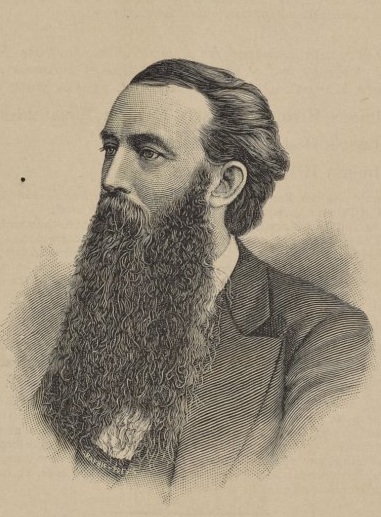
In the 19th century, several people were mythologizing the American Revolution. Many writers, who were children or grandchildren of veterans of that struggle, elevated the Founding Fathers as larger-than-life infallible heroes. These writers included Jared Sparks (at right), who altered George Washington's letters for publication to make him look more dignified. Washington Irving wrote a well-researched biography of America's first president as well but mostly told it through anecdotes, many of which are apocryphal.

But, perhaps, there is no more famous a myth-maker as Henry Wadsworth Longfellow, who turned Paul Revere into a national hero in the days leading to the Civil War. Despite what his poem claimed, Paul Revere did not wait on the banks of Charlestown to see the signal from the Old North Church ("one if by land, two if by sea"); he actually helped set them up as a back-up signal, in case he didn't reach his destination. He did not row himself to the opposite shore, but was rowed over by friends. He did not go to "every Middlesex village and farm," but only a select few. His main goal was to reach the Hancock-Clarke House in Lexington, just off the battle green.

Perhaps most importantly, Paul Revere did not ride alone. He was one of several riders that day, including William Dawes and Samuel Prescott. Longfellow was aware of all the available data on the historic ride and purposely chose to ignore it to create a composite character that would inspire his generation.

The irony comes from a letter written 18 years after the poem. Richard Henry Stoddard (pictured, right, near the end of his life in 1902) was preparing an article on Longfellow and wanted to confirm some biographical details. After reviewing an early draft, Longfellow pointed out a couple inaccuracies and, in a letter dated April 20, 1878, concluded:

This is perhaps of no great importance, but, generally speaking, fact is better in history than fiction.

Longfellow left just enough wiggle room to suggest that, for the sake of a poem, perhaps fiction can be useful in history.